
How the Google AI SEO Update Is Changing SEO in 2026
Search ranking behavior in 2026 is heavily influenced by the latest Google AI SEO update. Google now uses advanced AI systems to evaluate page usefulness, structure, content clarity, and technical performance. This change affects web developers, SEO professionals, bloggers, and marketing teams because ranking signals now depend more on context and page usefulness rather than simple keyword placement.
This case study shows the AI SEO impact 2026 using a real website scenario. It explains traffic changes after the Google AI SEO update, ranking shifts, technical fixes that improved visibility, and practical actions that helped regain lost positions.
TL;DR
The Google AI SEO update changed how rankings work in 2026 by relying heavily on AI systems that evaluate page usefulness, structure, and technical performance. Sites that relied on keyword density or thin articles lost traffic. Websites that improved structure, page clarity, and technical quality saw ranking recovery. This case study shows the exact changes and solutions.
Key Takeaways
AI systems now judge search intent match and page usefulness more strongly than keyword repetition.
Technical quality such as page speed, semantic HTML, and structured data affects visibility more than before.
Pages with thin content or AI generated filler text saw ranking drops after the Google AI SEO update.
Structured content, clear headings, and topical depth improved ranking stability.
Developers and SEO teams must work together since technical architecture now affects ranking signals.
Overview of the Google AI SEO Update
Google released a major AI ranking system update in early 2026. The update expands machine learning evaluation across content quality, technical structure, and search intent accuracy. Instead of scoring isolated signals, the system evaluates a full page context and how well it satisfies a user query.
Earlier SEO strategies focused heavily on keyword placement and backlinks. After the Google AI SEO update, ranking systems analyze semantic meaning, structured data, user interaction patterns, and topical coverage. This change caused ranking volatility across many industries.
| Ranking Factor | Before 2026 | After AI Update |
|---|---|---|
| Keyword Density | Moderate effect | Low effect |
| Content Structure | Medium importance | High importance |
| Technical Performance | Moderate influence | High influence |
| Topical Coverage | Medium | Very high |
Case Study Website Background
The analyzed site is a mid sized technology blog with around 350 articles and monthly traffic of 180,000 visits before the Google AI SEO update. The site covers programming tutorials, development tools, and digital marketing topics.
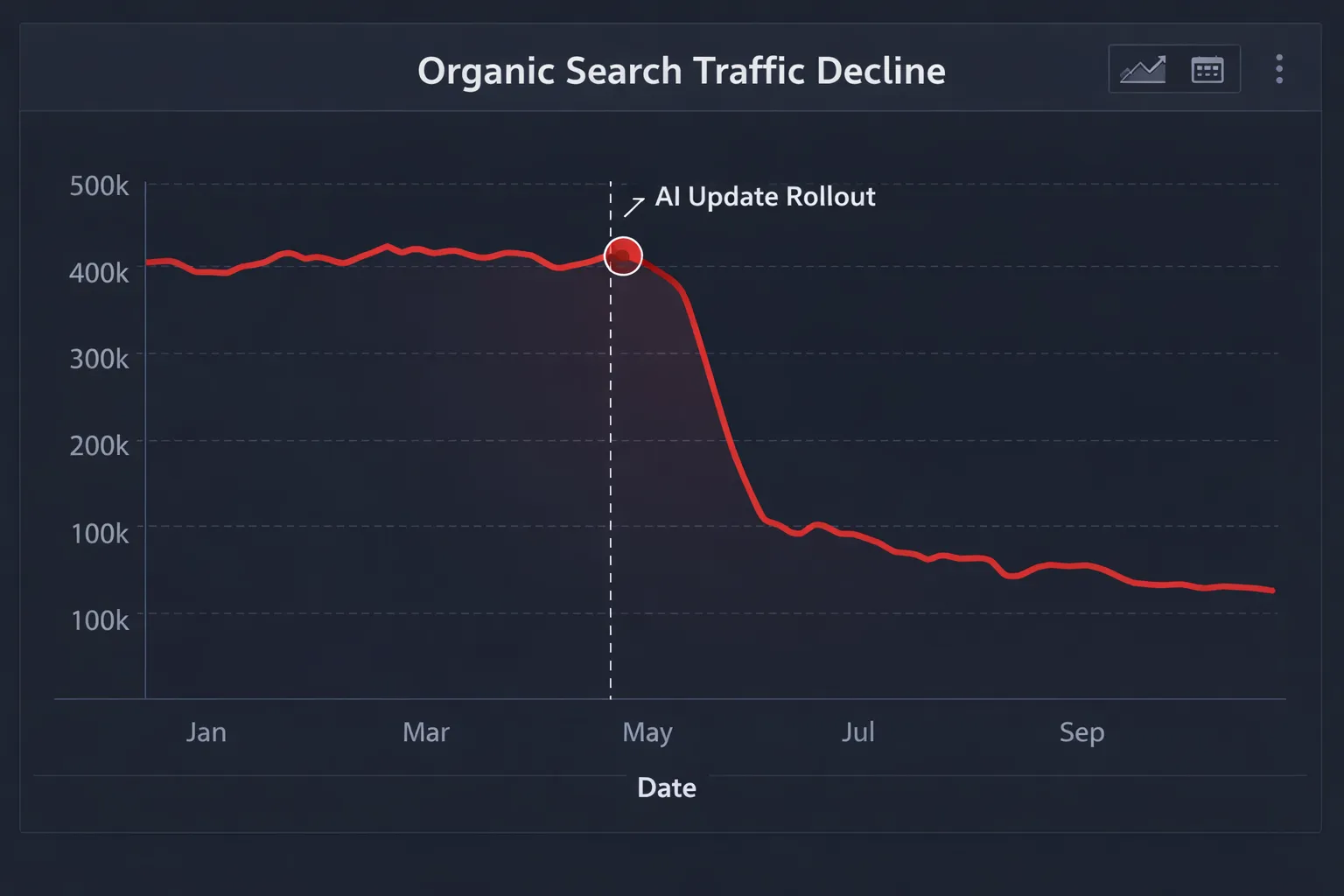
The site used standard SEO practices such as keyword optimization, internal linking, and article updates. After the AI update rollout, organic traffic dropped by 37 percent within three weeks.
Traffic and Ranking Changes After the Update
Search Console data showed a pattern across many pages. Articles with shallow explanations and repeated keywords lost visibility. Guides with structured tutorials and practical examples remained stable or improved ranking.
Important metrics from the case study period are shown below.
| Metric | Before Update | After Update |
|---|---|---|
| Monthly Organic Traffic | 180000 | 113000 |
| Average Position | 12.3 | 18.6 |
| Indexed Pages | 350 | 350 |
| High Intent Queries Ranking | 210 | 134 |
Key Problems Detected by the AI Ranking System
1. Thin Articles With Low Topical Depth
Many articles contained fewer than 800 words and repeated similar points. AI ranking systems detected limited informational value compared with competing pages. This caused ranking decline for tutorial content that lacked practical detail.
2. Weak Semantic Structure
The site used inconsistent heading hierarchy. Several articles skipped heading levels or placed multiple topics in a single section. AI analysis now uses structure signals to interpret page meaning, so this issue reduced ranking clarity.
3. Slow Page Performance
Performance analysis revealed several issues such as unused JavaScript, large images, and render blocking CSS. These technical problems slowed page load times and reduced ranking signals tied to user experience metrics.
4. Low Internal Topic Coverage
Many topics had only one article on the site. Competing websites published clusters of related articles covering broader subtopics. AI ranking systems evaluate topic coverage across the entire domain, which reduced authority signals for this site.
SEO Fixes Implemented After the Traffic Drop
The development and SEO teams implemented several improvements during a six week recovery phase.
- Expanded thin articles to detailed tutorials with practical examples and code snippets.
- Rebuilt heading structure using proper semantic HTML.
- Compressed images and removed unused JavaScript files.
- Created topic clusters with supporting articles around main guides.
- Added structured data markup for articles and tutorials.
Example of Improved Content Structure
<h1>Complete JavaScript Event Guide</h1> <h2>Understanding Event Propagation</h2> <h3>Bubbling vs Capturing</h3> <h2>Common Event Patterns</h2> <h3>Delegation Example</h3>
Clear heading hierarchy helps AI systems interpret content structure and topic relevance.
Results After Optimization
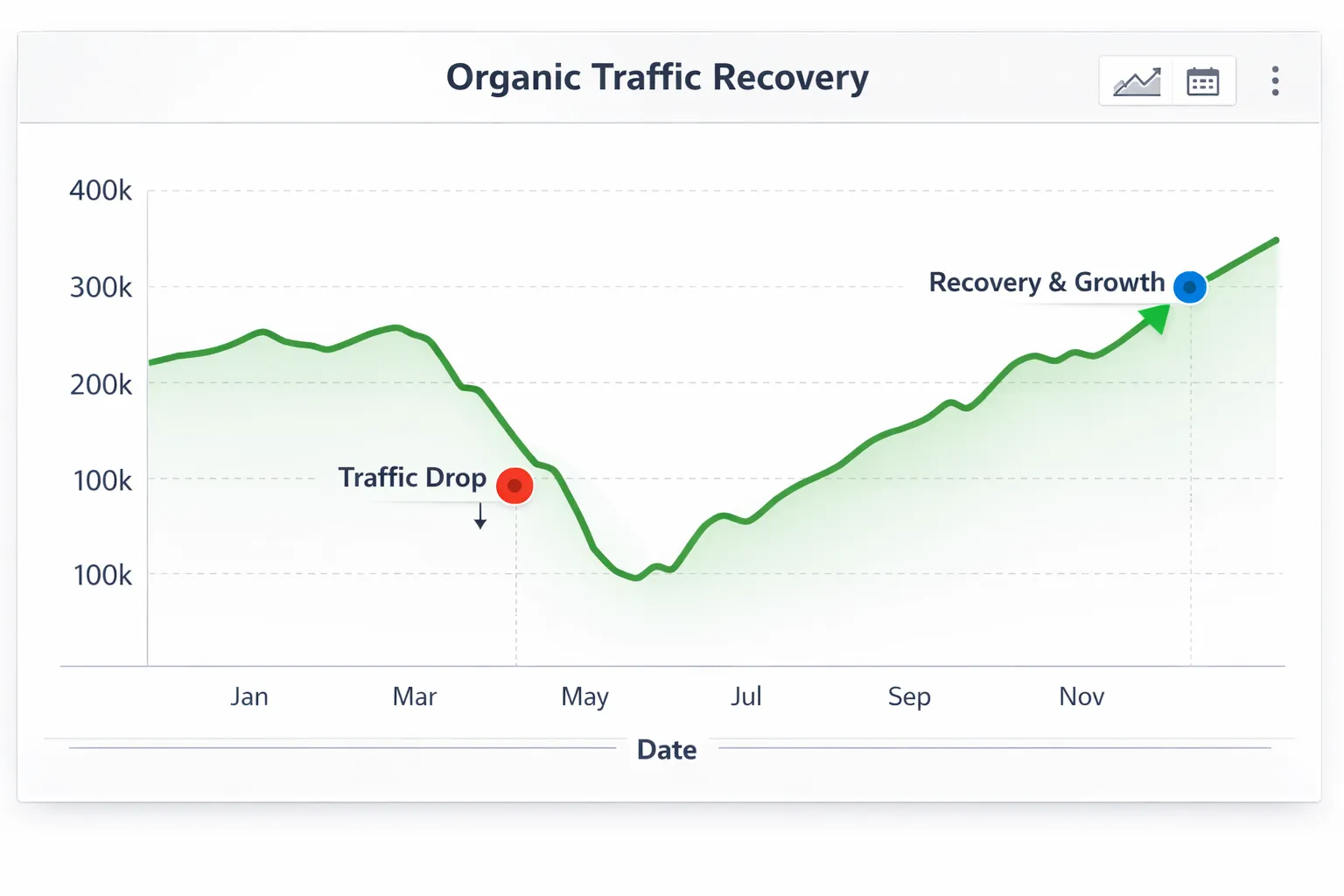
After implementing these changes, ranking recovery started within five weeks. Several pages regained first page positions for competitive queries. Overall traffic improved steadily during the next two months.
| Metric | After Fixes |
|---|---|
| Monthly Organic Traffic | 162000 |
| Average Ranking Position | 13.1 |
| Top 10 Keywords | Recovered for 64 percent of lost queries |
Technical Actions Developers Should Implement
Developers now play a larger role in SEO performance because AI ranking systems analyze site architecture and performance signals.
- Use semantic HTML structure with consistent headings.
- Implement structured data such as Article and FAQ schema.
- Reduce JavaScript blocking during initial page rendering.
- Optimize images using next generation formats.
- Improve internal linking across topic clusters.
Content Strategy Adjustments for 2026
Content teams must focus on depth and clarity rather than keyword repetition. Articles should fully answer the search intent and include practical examples, diagrams, or code when relevant.
Topic clusters now perform better than isolated articles because AI systems analyze topical coverage across the domain. This means a central guide supported by multiple detailed subtopics increases ranking potential.
Future Outlook for AI Driven Search Ranking
AI driven search evaluation will likely expand further in upcoming updates. Google continues refining ranking models that analyze context, intent accuracy, and content usefulness. Websites with clear structure, technical efficiency, and strong topical coverage will maintain stable visibility.
Conclusion
The Google AI SEO update in 2026 rewards well structured pages, deeper topic coverage, and strong technical performance. Developers and SEO teams should focus on site architecture, structured content, and topic clusters to maintain ranking stability under AI driven search systems.